Fragile Artwork Recovered After More Than 50 Years!
Legendary artist Roger Dean’s original artwork for iconic album ‘Fragile’ by British band YES to be offered at Auction
The original image known, seen and loved by millions now available to a worldwide audience
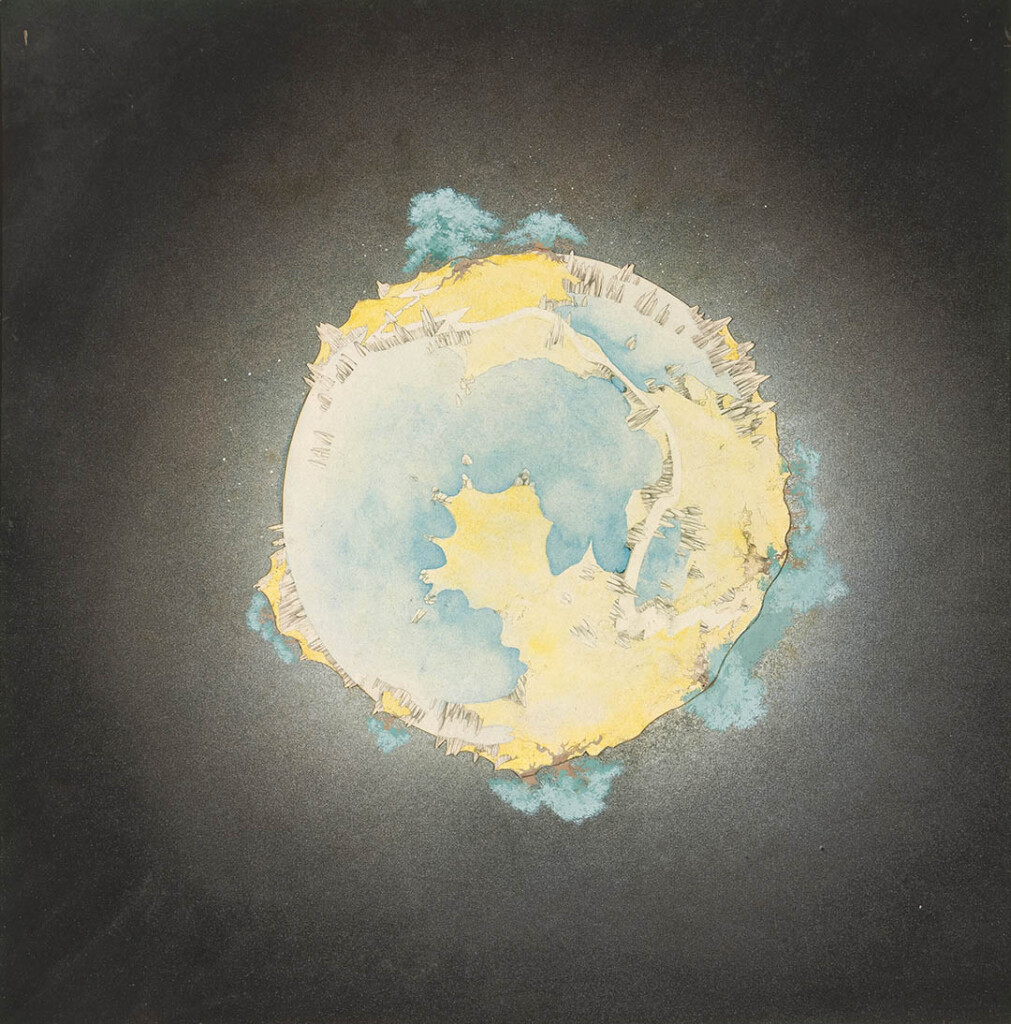
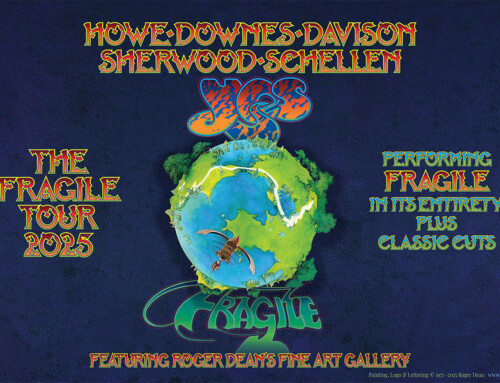
Original 1971 album cover artwork for the iconic British band Yes’ landmark album Fragile by legendary British artist Roger Dean Estimate £75,000 ($100,000) and a starting bid of (£37,500) ($50,000). Imaged by Heritage Auctions, HA.com
View the online auction now at: Heritage Auctions
An extraordinary piece of British music and art history is set to go under the hammer at Heritage Auctions, as the original 1971 album cover artwork for the iconic British band YES’ landmark album “Fragile”, created by legendary British artist Roger Dean, is offered for sale after being lost for more than 50 years and subsequently recovered.
With the album title “Fragile” already chosen, YES had initially considered a literal interpretation of fragility, but Dean proposed something far more ambitious, a creation myth about a child who dreams that their planet is breaking apart and builds a space ark to carry its fragments in search of a new home. Rather than illustrating fragility literally, Dean sought to wrap the concept around an entire world, creating a fantastical vision of a fractured planet populated with miniature landscapes and bonsai trees.
Dean created the work in watercolour, gouache, spray paint, pencil and collage. The resulting image launched a celebrated creative partnership that would help define YES’ visual identity for decades, spanning subsequent album covers, the band’s distinctive logo and stage designs.
During the 1970s the original painting was stolen from Dean’s Brighton art studio and it remained missing for decades. Its whereabouts remained a complete mystery, only finally coming to light out of the blue, following an approach from a collector in 2021. After efforts to secure its return proved unsuccessful, Dean reported the matter to police and engaged Art Recovery International. The organisation, led by founder Christopher A Marinello, subsequently negotiated the artwork’s return under a confidential settlement agreement and in September 2026, the painting was reunited with Dean for the first time in more than half a century. Now bearing the artist’s signature on the reverse, the remarkable work will be offered in Heritage Auctions’ Entertainment & Music Memorabilia Signature Auction on December 2nd, 2026, with an estimate of £75,000 ($100,000) and a starting bid of £37,500 ($50,000).
The sale marks the first time an original album cover painting from Dean’s celebrated 1970s collaboration with YES has ever come to auction, offering collectors a rare opportunity to acquire the work that helped establish the visual identity of one of Britain’s most influential progressive rock bands. Speaking about seeing the painting again after so many years, Dean said: “I was very excited and curious, I wondered how I would feel, would I immediately and unquestionably recognise it? Of course I did but there were changes, it was half a century since I last saw it and of course it was that much older […] I was very excited and thought it looked like it should, magical really.”
A creation myth that helped define progressive rock
Released in the UK in November 1971, “Fragile” marked a pivotal moment in YES’ career. The band’s fourth studio album was its first to feature keyboardist Rick Wakeman and the beginning of a creative partnership with Dean that would help define YES’ visual identity for decades, spanning album sleeves, its distinctive logo and stage designs. The album reached the UK Top 10 and peaked at number four on the US Billboard album chart. Its extraordinary success helped propel YES towards international prominence, while Dean’s fantastical imagery became inseparable from the band’s expansive, otherworldly sound.
Interestingly Dean explains that he developed the concept for the album cover with his brother. He explains: “It started with a story that my brother and I had written, a creation myth that was based on a miniature planet, where a child has a dream that their world will break up and they have to build an Ark to take family and friends with the fragments of the planet on a quest to find a new world a new home planet.”
He continues: “This is not the destruction of the planet but an evolution, the Ark will lead the fragments ‘spores’ to seed the new world.” The image of a fractured planet, surrounded by floating landmasses and fantastical landscapes, became one of the defining visual statements of progressive rock. Dean’s work captured the album’s title in a strikingly imaginative way, transforming the idea of fragility into a story of renewal and survival. “I wanted to do something that took the idea of fragility and wrapped it around the world, which would be very relevant in these days,” Dean has said of the concept.
The painting itself reveals further details of the artist’s creative process. Measuring 17.5 by 17.5 inches, it was created using watercolour, gouache, spray paint, pencil and collage. The globe at its centre is a collaged element attached to the board, while the spaceship seen on the finished album cover was added during the production process and does not appear in the original painting. Dean also offered a fascinating insight into the miniature world depicted on the planet, explaining: “I loved the idea of all those bonsai trees, miniature trees in the miniature world.”
The reunion with the artwork all these years later revealed another intriguing detail, on the reverse of the painting was an earlier attempt at the composition. Dean suggested that this side may originally have been intended as the front, with the ghostly outline of a planet visible beneath the surface, before he decided to start again on the opposite side. Following its recovery, Dean signed the reverse in blue watercolour crayon and silver ink, adding a personal postscript to the artwork’s extraordinary history.
A landmark work returns to the art market
For Heritage Auctions, the opportunity to offer the painting represents a significant moment in the collecting history of music memorabilia. Sarahjane Blum, Director of Illustration Art at Heritage Auctions in New York, said: “This is an exceptional piece of music history, not simply because it is the original artwork behind one of the most recognisable album covers of the progressive rock era, but because of the extraordinary story of its disappearance, recovery and reunion with Roger Dean. His imagery helped give YES a visual identity that was as distinctive and ambitious as its music. To have the original painting offered for the first time after more than 50 years missing is an incredibly exciting prospect for collectors and a landmark moment for original album artwork.”
The work’s recovery was made possible through the efforts of Christopher A Marinello, founder of Art Recovery International, who worked to secure its return to Dean. He commented: “Recovering a work of this cultural significance after more than 50 years is a remarkable outcome. The painting’s disappearance left a significant gap in the history of Roger Dean’s work and reuniting it with its creator was an important step in bringing that chapter to a close. Its return is a reminder that even after decades, the provenance of a missing artwork can be investigated and its rightful ownership addressed.”
The artwork’s journey from Dean’s studio to its rediscovery adds a compelling dimension to its artistic and historical importance. For more than half a century, the original painting was absent while its image circulated around the world on record sleeves and in the collective imagination of music fans.
Today, Dean’s influence extends well beyond YES. His distinctive visual language has appeared across album covers, logos, stage designs and video games, including work associated with Asia, Virgin Records, Psygnosis and Tetris. His ability to create fantastical landscapes that feel both organic and otherworldly has made his work instantly recognisable across generations.
The original “Fragile” painting now offers collectors the opportunity to own the physical work behind an image seen and loved by millions, as well as a rare surviving record of the creative process behind one of progressive rock’s most enduring collaborations.
View the online auction now at: Heritage Auctions
Fragile
Here’s a fun and often surprising fact regarding Roger Dean and Fragile — he did not hear the music before pitching YES his ideas or showing them any designs. He did, however, listen to the first three YES albums before getting to work, focusing predominantly on The YES Album. The YES/Roger Dean partnership was serendipitous, almost to the point of being supernatural — Dean created vistas that matched YES’ lyrics and instrumental majesty as if conceived by one mind.
Few marriages of sound and vision are as perfectly suited as YES and Roger Dean — it was like they grabbed the same shooting star simultaneously. The iconic YES logo was still an album away, but Fragile established a cosmic vibe forever associated with YES while laying a crucial foundation for two future YES narratives. The planet fragments would become the central visual themes of Yessongs — one of the most visually arresting and innovative triple live-album packages ever — and make an encore appearance on the jacket of their follow-up live album, Yesshows. The Fragile spaceship returns on Jon Anderson’s 1975 debut solo LP, Olias Of Sunhillow, albeit in a slightly different guise.
Roger’s inspiration for Fragile was not a vision of destruction but of possibility—the planet fragments represent the potential of new worlds and new life. While the detailed, expanded narrative of the celestial diaspora wasn’t fully formed yet, its origins are here. And while there’s rarely a direct graphic link in Dean’s visual representation of YES music, there’s a quasi-mystical reflectiveness that seems accurate even if it’s unexplainable.
Text by Syd Schwartz from the Deluxe Edition of Fragile